Extension Cost per m² in Edinburgh: A 2026 Guide
"How much per square metre?" is the first question almost everyone asks about an extension. It is a fair question, but a per-m² figure only gets you so far. This guide explains why that figure is not a quote, what it leaves out, and what really moves the price of your extension.
The council's guide is not a quote
The City of Edinburgh Council publishes a cost-of-works guide that it uses to check the value of work on building warrant applications. It is based on BCIS (Building Cost Information Service) rates and covers different types of work, including single-storey and multi-storey extensions, conservatories and garages. Source: City of Edinburgh Council, Cost of works.
Those rates are used to set the warrant fee. They are not a quote, and we do not publish a price per square metre. After a site visit we give a fixed written quote for the scope on your drawings. The price depends on that scope, and the programme is confirmed in the quote.
What a per-m² figure leaves out
A per-m² rate is an average across many projects. Your extension is one project, and a few things are often outside the headline figure:
- Professional fees: architect or designer, structural engineer, and sometimes a planning consultant.
- Statutory fees: the planning application fee and the building warrant fee. Warrant fees are set on the value of the work.
- Kitchen, bathroom and fitted furniture: these can cost as much as the shell.
- External works: landscaping, paths, drainage diversions and boundary walls.
- Contingency: most clients set aside a sum for things that are only found once the ground is open or walls are opened up.
- VAT: check whether any price you are given includes it.
What pushes the price up
Ground and foundations. Edinburgh has everything from rock close to the surface to made ground and old mine workings in parts of the Lothians. Trees close to the extension can mean deeper foundations. Your engineer will design for what is there.
Structural openings. Knocking a wide opening through the back wall of a stone house to join the old and new rooms means steel beams, padstones and temporary support. The wider the opening, the bigger the steel.
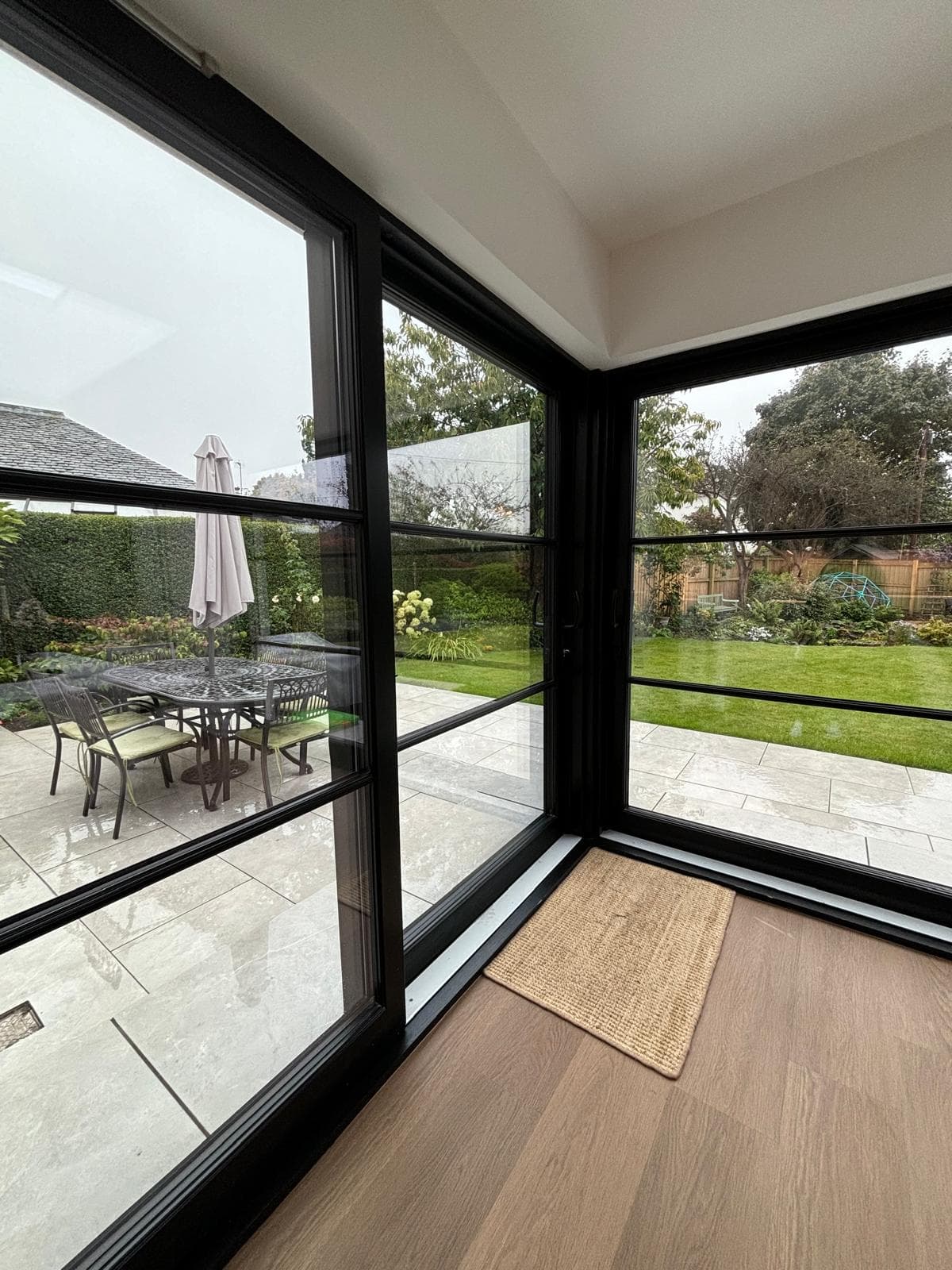
Glazing. Large sliding doors, bi-folds and roof lanterns are some of the most expensive items in an extension.
Access. If there is no side or rear access, everything has to come through the house or be lifted over. That costs labour time.
Conservation areas and listed buildings. Natural stone, slate and timber windows to match the existing house cost more than standard materials. Planning conditions can add steps.
Finish level. Underfloor heating, high-end flooring and bespoke joinery all add up.
What can bring the price down
- A simple shape. Rectangular plans with a simple roof are cheaper to build than complex shapes.
- Fewer, well-placed openings. One large opening may be better value than several small ones.
- Decisions made early. Changes once work has started are the most expensive kind.
- Complete drawings. The more detail in the drawings and specification, the fewer provisional sums and surprises.
Why quotes for the same extension vary so much
If you get three quotes and they are a long way apart, they are usually not pricing the same thing. One may include the kitchen and one may not. One may have a large provisional sum for foundations. One may exclude plastering in the existing house. Ask every builder for an itemised price against the same drawings, and compare the items, not the totals. Our guide to comparing extension quotes in Edinburgh covers this in detail.
A simple way to budget
- Measure the internal floor area you want to add.
- Treat that area as the brief for a fixed written quote, not as a figure to multiply by a rate.
- Add your professional and statutory fees.
- Add the kitchen, bathroom and finishes you want.
- Add a contingency.
- Then get itemised quotes from your drawings and compare them against this budget.
Our quote is a fixed written price for the work on the drawings, given after a site visit. It depends on the scope, and the programme is confirmed in the quote.
Frequently asked questions
How much does a single-storey extension cost per m² in Edinburgh?
We do not publish a price per square metre. The council's cost-of-works guide is used to set the building warrant fee, and it is not a quote. We give a fixed written quote after a site visit. The price depends on the design, ground, access and finish.
Is a two-storey extension cheaper per m²?
We do not price from a per-m² rate. A two-storey extension gives you two floors of space on one set of foundations and one roof. The price is a fixed written quote after a site visit, and it depends on the scope.
Does the per-m² figure include VAT and fees?
Treat it as build cost only. Budget separately for professional fees, planning and warrant fees, VAT where it applies, fitted kitchens and bathrooms, and a contingency.
Why are my extension quotes so different?
Usually because they include different things. Ask for itemised prices against the same drawings and compare line by line.
Can I get a fixed price for an extension?
You can get a firm written price for the work shown on the drawings. Items that cannot be seen until work starts, such as some foundation work, are often shown as provisional sums.
Get a written price
Send us your drawings and we will price them line by line, so you know exactly what is included.